
Horse Allergy and Intolerance Test Guide for Owners
This horse allergy and intolerance test guide explains what at-home panels screen for and how to use results with your vet to target triggers faster.

By Angela Green
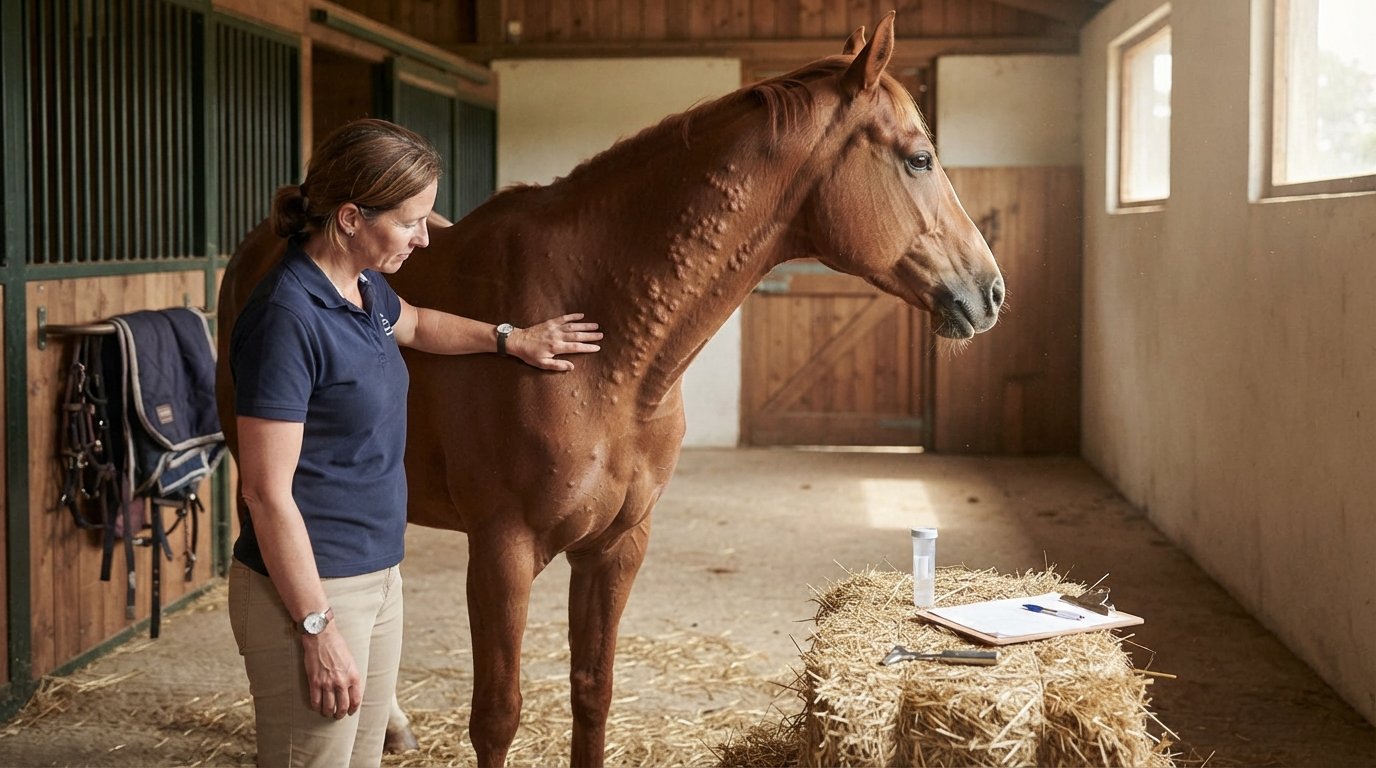
Your horse comes in from turnout with hives along the neck, a runny nose that will not quit, or loose manure that appears every time you open a new bag of feed. You suspect an allergy or an intolerance, but the list of possible triggers feels endless: pollen, dust, insects, hay, oats, and a dozen other things. Sorting out which one is responsible can take months of trial and error, and every week of guesswork is another week your horse stays uncomfortable. This horse allergy and intolerance test guide walks you through how at-home testing works, what the panels actually screen for, and how to use the results responsibly alongside your veterinarian.
At-home pet testing has expanded well beyond dogs and cats. Horse owners in the US can now order allergy and intolerance screens that analyze a sample collected on their own barn aisle, with results delivered by email in a matter of days. The appeal is obvious: fewer clinic visits, a broader look at potential triggers, and a starting point for a more focused conversation with your vet. The limits matter just as much, though, and understanding them is what separates a useful test from an expensive distraction. This guide covers both sides so you can decide whether testing fits your situation.
Why Allergies and Intolerances Look So Similar in Horses
Horses can react badly to their environment or their diet in ways that look nearly identical from the stable door. A horse with an insect bite hypersensitivity, a pollen allergy, and a feed intolerance may all present with itching, hives, skin crusts, or digestive upset. That overlap is exactly why owners often guess wrong for months. The immune system does not label its reactions for us, and the clinical signs of an allergy (an immune-mediated response) and an intolerance (a non-immune reaction, often digestive) can be frustratingly similar.
The distinction matters because it shapes what you test for and what you do with the answer. Allergies typically involve antibodies reacting to proteins in the environment or in feed, and they often show up as skin or respiratory signs. Intolerances tend to produce digestive signs such as loose manure, gassiness, or poor condition after eating a specific ingredient, and they do not involve the same antibody pathways. A single test panel can screen for both categories, but the interpretation and the management plan diverge once you have results in hand.
There is also a seasonal clue worth watching. If your horse's hives flare every August and settle by November, insects or late-summer pollens are more likely culprits than a feed ingredient the horse has eaten all year. If the problem tracks with a new hay supplier or a change in concentrate, a feed trigger moves up the list. Writing these observations down before you order a test gives you context that a lab report alone cannot provide.
Common Equine Allergens: Feed, Pollen, Insects, and Environment
Equine allergens fall into a handful of broad groups, and the most common offenders are surprisingly consistent from barn to barn. Knowing the categories helps you read a test report without feeling like you are decoding a foreign language.
- Feed allergens: oats, barley, corn, soy, alfalfa, and various commercial concentrates are frequent suspects, along with hay and pasture grasses.
- Environmental and pollen allergens: tree, grass, and weed pollens, mold spores, dust mites, and storage mites found in hay and bedding.
- Insect allergens: saliva from biting midges (the driver of sweet itch), mosquitoes, stable flies, and horn flies is a major trigger of seasonal skin disease.
- Contact allergens: bedding materials, shampoos, fly sprays, and tack components can cause localized skin reactions.
In practice, insect bite hypersensitivity and pollen allergies account for a large share of seasonal itching and hives in horses, while feed-related issues often sit behind recurrent digestive upset or unexplained poor condition. A good panel screens across all of these categories rather than focusing on one, because horses can be sensitive to more than one thing at once. That said, a positive result on a broad panel is a clue, not a conviction: many horses show antibodies to substances they never react to clinically.
What Horse Allergy Tests Actually Screen For
At-home equine allergy tests typically analyze a serum or hair sample for antibody reactivity against a panel of allergens. The larger panels on the market screen for up to 120 food and environmental allergens, covering pollens, molds, insects, dust, and common feed ingredients in a single report. Results are usually presented as a graded reactivity score per allergen, with higher scores suggesting a stronger immune response.
That breadth is the main advantage over guesswork. Instead of removing one feed at a time over months, you get a snapshot of every substance on the panel at once, which can point you toward a shortlist of candidates worth investigating. For a horse with a long, frustrating history of skin or digestive problems, that shortlist can save real time and money.
It is important to understand what the test is not. It does not diagnose an allergy, and it does not tell you that a specific allergen is definitely causing your horse's current signs. A high score means the immune system has produced antibodies against that substance, which can happen without any clinical disease at all. The report is best treated as a map of possibilities to explore with your veterinarian, who can combine it with physical examination, history, and controlled elimination trials. PetTestKit publishes independent, vet-aware guides to at-home pet test kits, including horse allergy and DNA testing options, and consistently frames results as a starting point for a conversation with your vet rather than a diagnosis.
Sample Collection and What to Expect
Most at-home horse allergy kits use either a blood draw or a hair sample, depending on the provider. Blood collection typically requires a small sample from the jugular vein, which many owners arrange with their vet or an experienced handler; hair kits are simpler but may have different accuracy profiles. Once collected, the sample is mailed to the laboratory, and results usually arrive by email within one to three weeks. The process is straightforward, but it is not instant, which is why testing is a poor fit for a horse in acute distress.
Intolerance Panels: 300+ Items and What They Mean
Intolerance testing is a separate category from allergy testing, and equine panels can be remarkably broad. Some at-home intolerance screens cover more than 300 items, spanning feeds, forages, treats, supplements, and environmental substances. The goal is to identify ingredients that may be contributing to digestive signs such as loose manure, gassiness, weight loss, or behavioral changes around feeding time.
Because intolerances are not immune-mediated in the classic antibody sense, the interpretation works differently. A flagged item on an intolerance panel suggests a sensitivity worth testing through dietary elimination, not a confirmed cause. The practical value lies in prioritization: if a panel flags alfalfa, soy, and a specific commercial feed, you can design an elimination trial around those items first instead of cycling through every feed in the barn.
Owners should be cautious about over-reading these reports. A panel with 300 items will almost always flag something, and a flagged item does not mean your horse must avoid it forever. The sensible approach is to pick the top few flagged items that also match your horse's diet and history, remove them one at a time under veterinary guidance, and document what changes. This turns a broad report into a focused, evidence-based management plan.
Working With Your Equine Vet on Management
Test results are most useful when they feed into a structured plan rather than a standalone decision. Your veterinarian can help you interpret the report in light of your horse's history, current medications, and living arrangements, then design a management strategy that addresses the most likely triggers first. That might mean changing bedding, adjusting turnout times during high-pollen periods, using insect protection, or running a supervised elimination diet.
Allergy management in horses is rarely a one-step fix. A realistic plan often combines several measures:
- Remove or reduce exposure to the highest-priority allergens identified in the report and confirmed by history.
- Run a controlled dietary elimination trial for suspected feed intolerances, with a clear baseline and a set review date.
- Improve environmental controls such as bedding, ventilation, and insect protection during peak season.
- Reassess with your vet after a defined period and adjust the plan based on actual response, not test scores alone.
This is also where the limits of home testing become clear. If your horse is severely itchy, struggling to breathe, or losing weight rapidly, skip the test for now and call your vet or an emergency equine hospital. At-home kits take days to weeks to return results and are not designed for urgent problems. Use them when your horse is stable and you are looking for clues to discuss at a routine appointment, and always confirm health concerns with your vet before making major changes to feed, bedding, or medication.
Choosing the Right Test and Avoiding Common Mistakes
The market for equine testing is broader than it was a few years ago, and not every kit is built the same way. Before ordering, check what the panel actually screens for, whether the sample is blood or hair, how results are reported, and whether the provider offers any guidance on next steps. A cheap panel that flags 20 items with no context is less useful than a slightly pricier one that covers the categories relevant to your horse and explains how to interpret the scores.
Common mistakes are worth naming. Testing a horse during an acute flare can muddy the picture, since immune activity is elevated across the board. Testing without a written history of signs and seasonal patterns wastes the report's context. And treating a flagged item as a confirmed diagnosis can lead to unnecessary dietary restrictions that do more harm than good. The owners who get the most from these kits are the ones who treat the report as one input among several, alongside veterinary examination and careful observation.
Cost is another practical consideration. Panels vary widely in price, and a broad allergy plus intolerance combination will cost more than a single screen. For many owners, the sensible sequence is to start with the category that best matches the horse's signs (skin and respiratory pointing to allergy, digestive pointing to intolerance), then expand only if the first round does not clarify the picture. Your vet can help you decide which panel is worth the spend for your specific horse.
Frequently Asked Questions About Horse Allergy Testing
Can a home test tell me definitively what my horse is allergic to?
No. Home tests measure antibody reactivity or sensitivity markers, not clinical disease. A positive result identifies a substance the immune system has responded to, but only your veterinarian can determine whether that substance is actually causing your horse's signs. Results should always be interpreted alongside history, examination, and controlled trials.
How long do results take, and can I test a horse that is currently unwell?
Most labs return results within one to three weeks. If your horse is acutely unwell, do not wait for a test: contact your vet or an emergency equine hospital immediately. Testing is best used when the horse is stable and you are investigating a chronic or recurring pattern.
Are intolerance panels with 300+ items reliable?
They are useful for generating a shortlist of suspects, but they are not diagnostic. A flagged item should be confirmed through a supervised elimination trial. Treat the panel as a prioritization tool, not a verdict, and review the findings with your vet before overhauling your horse's diet.
Sorting out why a horse itches, coughs, or struggles with loose manure is rarely quick, but it does not have to be purely random. A well-chosen allergy and intolerance panel gives you a structured starting point, a shortlist of suspects, and a report you can bring to your vet for a more productive conversation. Use it as one piece of evidence in a larger plan, keep your expectations calibrated, and let your veterinarian guide the management decisions that follow. That combination, careful testing plus professional oversight, is what gives horses the best chance of real relief.